


Your local manufacturer in Kanuru
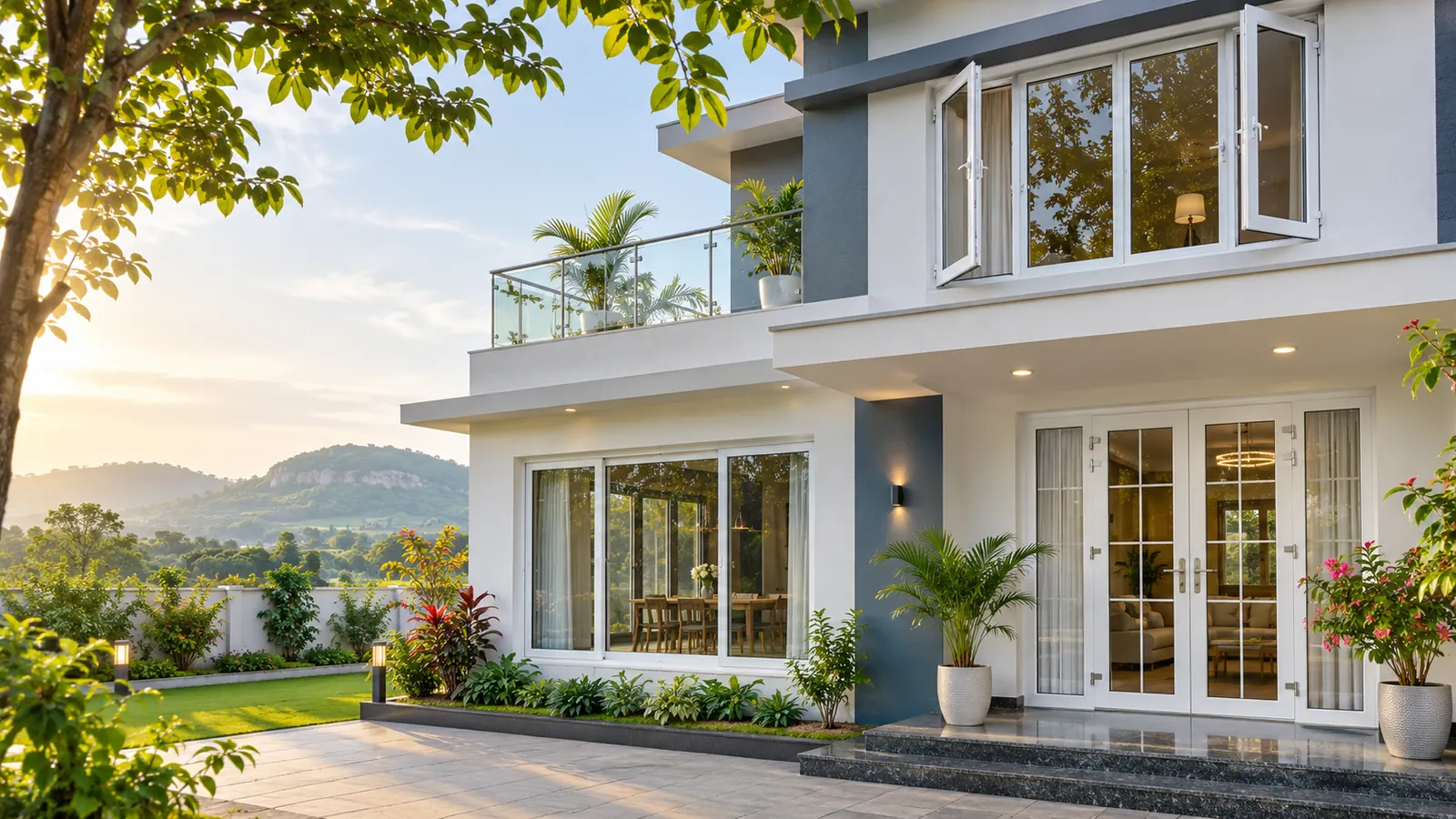
Building a new house or replacing old windows? iTech uPVC Designers manufactures uPVC windows and doors in New Auto Nagar, Kanuru, Vijayawada. We help you choose a design that fits the opening, lets in useful daylight and works around your furniture. Since 2015, our business has offered window, door and related fabrication options for local projects. You can discuss one room, a full house or a larger building with the team.
Our factory address is Block A-1, Plot Nos: 1-1/1, New Auto Nagar, Kanuru, Vijayawada, Andhra Pradesh 520007, India. Call before visiting so we can confirm a suitable time. Bring a floor plan, photographs or a simple list of the windows and doors you need. Approximate measurements help us start the discussion; final site measurements are needed before fabrication.
Choose windows and doors that suit each room
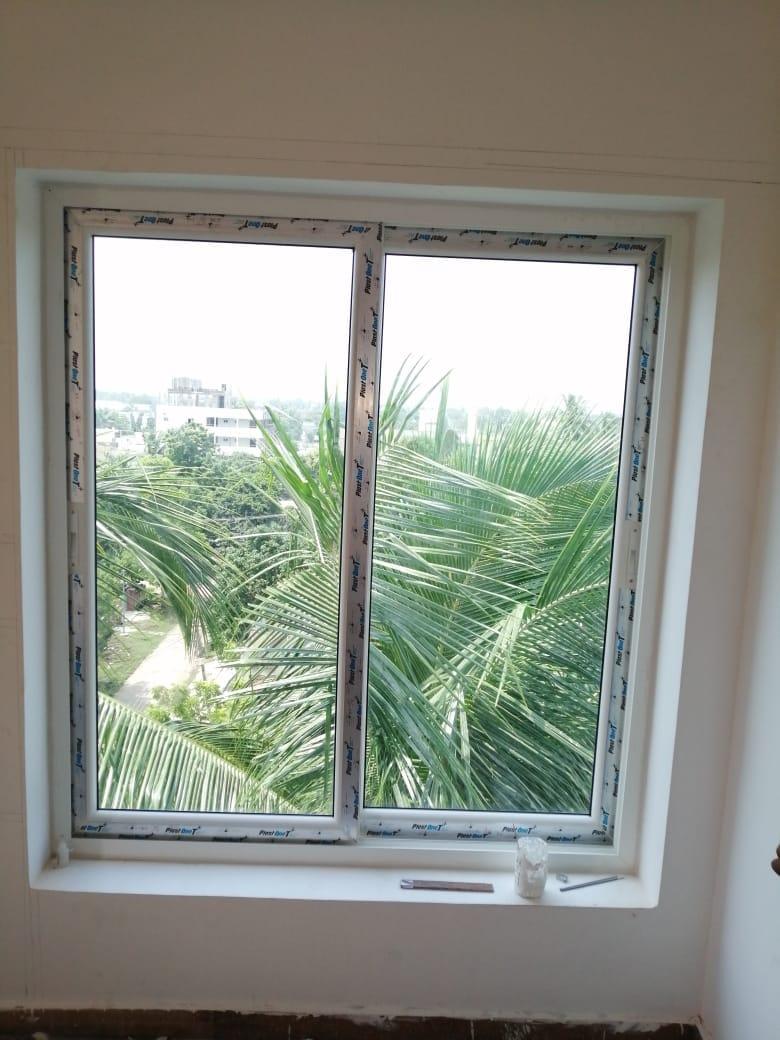
Sliding windows move sideways along tracks. They suit rooms where there is little space for a panel to swing open. Compare two-track, 2.5-track and three-track arrangements with the team. The number of glass panels, their movement and any separate mosquito screen decide how much of the opening is available for airflow.
Casement windows open on hinges and need clear space around the opening. They can be useful where you want a larger opening for fresh air. French windows use paired opening panels for a wider view and access to the opening. Check how the centre closes and whether there is a fixed centre bar.
Fixed windows bring in daylight and a view without opening. Combine them with suitable opening windows when the room also needs ventilation. For balconies and garden entrances, compare sliding doors, hinged doors and French doors. Check the clear walking width, bottom step, handle position and safe glass choice before deciding.
uPVC windows for apartments and houses
The best starting point is a room-by-room plan. In an apartment, check how the window works beside a security grill, balcony or neighbouring wall. In an independent house, think about which side faces the afternoon sun and where rain reaches the wall. A quiet bedroom facing an inner courtyard may need a different glass and opening arrangement from a living room facing Bandar Road or an NH16 approach.
Ask for a sketch before choosing tracks. Our two-track and three-track guide explains how the panels overlap. The available airflow depends on the moving panels and clear opening, rather than the track count alone. For a kitchen, check that the handle is reachable above the counter and that the panel will not clash with a tap, shelf or appliance.
When comparing sliding and casement windows, try both movements on a sample if possible. A sliding panel stays within its frame, while an open panel needs space beside it. Check the opening from inside and outside, including access for cleaning. For the glass, share whether the room needs privacy, more daylight or control of afternoon glare. Our glass options guide explains the questions to ask before choosing a thickness or finish.
Bay windows can create a wider outlook where the building design allows the projecting shape. They need suitable structural support and weather details. Louvers use angled blades for airflow; discuss rain exposure, insect screening and privacy before selecting them. A bathroom may instead suit a high-level ventilator with suitable glass. Confirm current availability for these designs.
uPVC doors for balconies, living rooms and terraces
Door planning starts with the space people actually walk through. A wide frame does not mean the full width opens. Sliding glass panels stack alongside one another; hinged panels need a clear swing area. Compare two-track, three-track and four-panel options using a drawing of your opening. If mosquito mesh is needed, include its frame and movement in the same drawing.
A single open or casement door may suit a smaller entrance where there is enough swing space. French doors use paired panels and need a clear plan for everyday entry, locking and furniture placement. Check whether one panel will normally stay closed. Tell the team if children use the door often, and ask how the handle, glass and opening restraint will suit that use.
Share the finished floor levels, tile thickness and existing security grill before fabrication. The bottom step, called the threshold, must be considered with drainage and daily access. Mention older family members or anyone who finds a raised step difficult. A balcony still needs its own suitable safety barrier; a mosquito screen cannot replace it. Read our French versus sliding door comparison and threshold guide for the details to discuss.
Planned for local heat, humidity and monsoon rain
Vijayawada homes face strong summer sun, humid periods and seasonal heavy rain. uPVC is a practical frame material because it does not absorb moisture like timber and does not need routine repainting. The frame material is termite-resistant, making it an alternative where timber-frame damage is a concern. Choosing uPVC also avoids using timber for those frames.
A comfortable room depends on the complete window, not just its frame. On sunny sides of the house, discuss glass options, curtains and external shade. For rain-exposed openings, correct sill details, clear drainage paths, well-fitted seals and careful installation matter. We do not promise that every window is completely soundproof, waterproof or able to cut electricity bills by a fixed amount.
Humidity makes ventilation and sensible hardware care worth planning. Dust can collect in sliding tracks, especially when nearby building work is underway. Clean the channels gently and keep drainage outlets open. If there is persistent dampness around an old frame, have the wall and sill checked as well; replacing the frame alone may not solve the cause.
For a sun-facing room, our Vijayawada heat guide explains the role of orientation, shade and glazing. Use the monsoon checklist before the rains. For traffic-facing rooms, read the noise-reduction guide and tell the team what you hear and when, so the proposed glass and sealing can be discussed properly.
Strength and material quality you can discuss
Ask about the profile design, internal reinforcement where required, corner joints, glazing and hardware. Supports must suit the opening size, glass weight and wind exposure. A neat-looking frame alone cannot answer these questions. The handle should work smoothly, the panels should close correctly and the seals should fit evenly. Our guide to uPVC frame strength explains what to check in simple terms.
Vijayawada, Guntur, Amaravati and nearby areas
We welcome enquiries from Benz Circle, Patamata, Gunadala, Kanuru, Poranki and other neighbourhoods in and around Vijayawada. We also discuss projects in Guntur, Amaravati and nearby parts of Krishna district. These are service locations, not separate iTech branches. Our manufacturing address remains in Kanuru.
Send your site location early, especially for work outside Vijayawada. This helps the team confirm measurement visits, delivery access, installation availability and any travel charges. For apartments, mention the floor, lift access, association rules and working hours. See our service-area pages for planning points, then call to confirm arrangements for your address.
Our nearby planning pages cover Kanuru, Poranki, Penamaluru, Tadepalli, Mangalagiri, Gannavaram, Guntur and Tenali. Whether the site is near Benz Circle, Governorpet, MG Road or One Town, send the exact location and access details. We confirm each project’s arrangements directly.
How a project with iTech works
- Site visit and discussion. Share your location, room use, photographs and priorities. Agree a visit with the team and discuss privacy, airflow, mosquito mesh and access.
- Measurement and approval. The openings, wall condition and floor levels are checked. Confirm the dimensions, opening direction, panel layout, glass and written quotation before ordering.
- Itemised quotation. Check the frame, glass, mesh, hardware, finish and installation listed. Agree any civil work, special access equipment and other charges before giving approval.
- Fabrication. Windows and doors are made to the agreed measurements and specification. Confirm the production schedule, payment stages and anything your builder must finish first.
- Installation and handover. Agree the fitting work, sealing, delivery and waste removal included. At handover, check panel movement, locks, handles, seals and drainage, and ask for care instructions.
Care and warranty questions
At handover, ask how to operate the locks, clean the frames and look after the tracks, hinges and seals. Use gentle cleaning methods and follow the care instructions for the supplied hardware. Ask the team for the warranty that applies to the system being quoted. Profile, glass and hardware terms can differ; no single warranty period is published here without confirmation. Our warranty questions guide helps you compare the written terms.
Get a quotation with clear details
Compare quotations using the same opening sizes and list of work. Check whether dismantling an old frame, making good the wall, transporting units upstairs and removing waste are included. Ask when the opening must be ready and who will finish the surrounding plaster or tiles. Our window price guide explains why two similar-looking windows can have different costs. Keep the approved drawing and specification with your quotation so you can refer to them at handover.
A useful enquiry includes your name, phone number, project location, number of openings and approximate width and height. Mention the measurement unit and whether this is a new building or a renovation. Tell us if you need mosquito mesh, privacy glass or a particular opening style. The final price depends on the agreed products and site work.
Call +91 90301 00314 or +91 92900 61259, email itechupvcdesigners@gmail.com, or use our contact form to prepare a WhatsApp or email enquiry. We will help you work through the options for your home.